
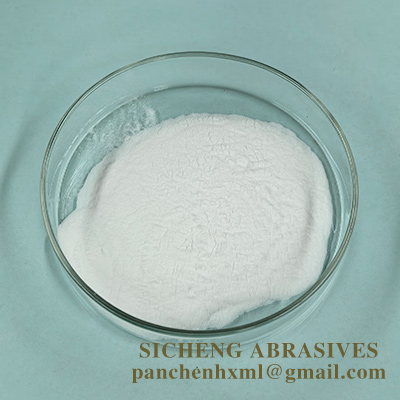
Hollow Glass Microsphere for Zinc Rich Primer
Hollow glass microspheres, used as functional fillers in zinc-rich anti-corrosion primers, effectively reduce coating density, improve coating uniformity, and enhance application flow and spraying stability. Their closed spherical structure forms a physical barrier within the coating, reducing the penetration path of corrosive media and assisting zinc powder in providing long-lasting corrosion protection. The microspheres also improve coating density and adhesion, reduce film weight, and lower the risk of sagging when applying thick coats. This achieves a dual improvement in coating lightweighting and durability while ensuring the excellent cathodic protection and rust prevention performance of the zinc-rich primer.
Features:
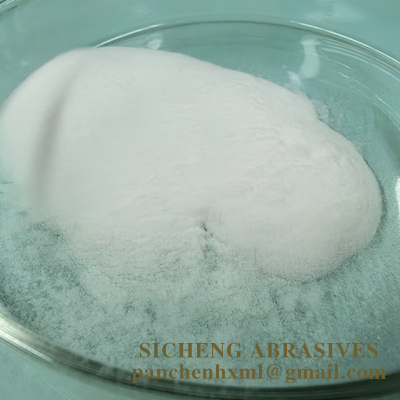
- Hollow glass microspheres have a microscopic morphology of hollow spheres with a wall thickness of approximately 1-2 μm, exhibiting low density and high strength.
- Low specific gravity and high floating rate, making them widely applicable as weight-reducing materials in rubber, latex, wood substitutes, PVC plastisol, and modified resin.
- Produced using a special process, our products feature high crush strength and a high strength-to-weight ratio.
- The hollow glass microspheres are made of soda-lime borosilicate glass with a softening point of approximately 600°C, allowing them to withstand temperatures below 600°C.
- Low thermal conductivity and low dielectric constant. Glass bubbles are non-combusitable and nonporous, it creates a stable hollow structure when used in coatings or products, thus reducing thermal conductivity and dielectric constant.
- Low Alkalinity, low volatile organic compound (VOC) content, and high viscosity.
- Good flowability and low specific surface area.
- Excellent electrical insulation properties and corrosion resistance.
As an additive in matrix materials, its main functions include:
- Reducing weight.
- Thermal insulation.
- Sound insulation and noise reduction.
- Improving dielectric properties.
- Reducing resin usage and VOC emissions.
- Increasing rigidity and preventing cracking.
- Improving durability.
- Improving volume stability and reducing shrinkage and cracking.
Technical Index
| Specific Gravity | 0.12-1.6 g/cm3 |
| Bulk Density | 0.10-0.62 g/cm3 |
| Thermal Conductivity | 0.038-0.085 W/M·K |
| PH | 8-9.5 |
| Dielectric constant | 1.2 -2.0 (100 MHz) |
Specification:
| Spec. | Ture Density (g/cm3) | Bulk Density (g/cm3) | Crush Strength (Mpa/Psi) | D50(um) | D90(um) |
| HL15 | 0.13-0.17 | 0.08-0.09 | 4/500 | 65 | 120 |
| HL20 | 0.20-0.22 | 0.10-0.12 | 4/500 | 65 | 110 |
| HL25 | 0.24-0.27 | 0.13-0.15 | 5/750 | 65 | 100 |
| HL30 | 0.29-0.32 | 0.15-0.18 | 10/1500 | 55 | 85 |
| HL32 | 0.31-0.33 | 0.17-0.19 | 14/2000 | 45 | 80 |
| HL35 | 0.33-0.37 | 0.18-0.21 | 21/3000 | 40 | 70 |
| HL38 | 0.37-0.39 | 0.19-0.22 | 38/5500 | 40 | 65 |
| HL40 | 0.39-0.42 | 0.19-0.23 | 28/4000 | 40 | 70 |
| HL42 | 0.41-0.44 | 0.21-0.24 | 55/8000 | 40 | 60 |
| HL46 | 0.44-0.48 | 0.23-0.26 | 41/6000 | 40 | 70 |
| HL50 | 0.48-0.52 | 0.25-0.27 | 55/8000 | 40 | 60 |
| HL55 | 0.53-0.55 | 0.27-0.29 | 68/10000 | 40 | 60 |
| HL60 | 0.58-0.62 | 0.29-0.34 | 83/12000 | 40 | 65 |
| HL60S | 0.58-0.63 | 0.30-0.34 | 125/18000 | 35 | 55 |
| HM10 | 1.4-1.6 | 0.45-0.50 | 193/28000 | 5 | 10 |
| HM15 | 1.2-1.3 | 0.40-0.45 | 124/18000 | 7 | 15 |
| HM20 | 1.05-1.15 | 0.39-0.44 | 124/18000 | 9 | 20 |
| HM30 | 0.9-1.0 | 0.35-0.4 | 83/12000 | 14 | 30 |
| HS20 | 0.18-0.22 | 0.10-0.12 | 7/1000 | 60 | 90 |
| HS22 | 0.20-0.24 | 0.11-0.13 | 8/1200 | 45 | 70 |
| HS28 | 0.27-0.30 | 0.15-0.17 | 28/4000 | 45 | 65 |
| HS38 | 0.36-0.40 | 0.19-0.22 | 38/5500 | 30 | 50 |
| HS42 | 0.40-0.44 | 0.21-0.24 | 55/8000 | 25 | 40 |
| HS46 | 0.44-0.50 | 0.22-0.25 | 110/16000 | 20 | 30 |
| HS60 | 0.58-0.62 | 0.29-0.33 | 193/28000 | 16 | 25 |
| HS65 | 0.63-0.67 | 0.30-0.33 | 207/30000 | 13 | 20 |
| HS70 | 0.75-0.80 | 0.33-0.35 | 207/30000 | 10 | 15 |
Applications:
- Thermal insulation paint, heat resistance coatings, and UV-resistant coatings. Applications include housing, building materials, aerospace equipment, pipelines, oil storage tanks, industrial plants, and large grain silos.
- Energy-saving building materials, thermal insulation mortar, thermal insulation putty, and noise-reducing coatings.
- Utilizing the good flowability and high crush strength of glass bubble, they are used in oilfield well cement slurry and low-density drilling fluids.
- Low-dielectric engineering plastics. Applications include 5G communication equipment, aircraft radomes, and high-frequency copper-clad laminates (CCL) for PCB circuit boards.
- Low-density silicone adhesives, epoxy resin adhesives, acrylic resin, and polyurethane adhesives. Applications include electronic potting compounds, battery potting compounds, and MS sealants.
- Lightweight engineering plastics, PVC plastisol, and structural glue. Applications include automotive plastic parts, vehicle and home appliance adhesives and sealants, and helmets.
- Anti-corrosion and antifouling coatings. Applications include automotive and marine coatings, pipeline anti-corrosion coatings, zinc-rich primers for steel structures, and weather-resistant anti-corrosion coatings.
- Rubber elastomers. Applications include rubber seals, rubber shoe soles, cable rubber layers, tires, latex products, sporting goods, and rubber everyday toys.
- Solid buoyancy materials. Applications include oil tanker hulls, underwater robot floats, fish buoys, and oil pipeline buoyancy supports.
- Epoxy tooling board. Applications include the manufacture of various molds of epoxy and polyurethane.