

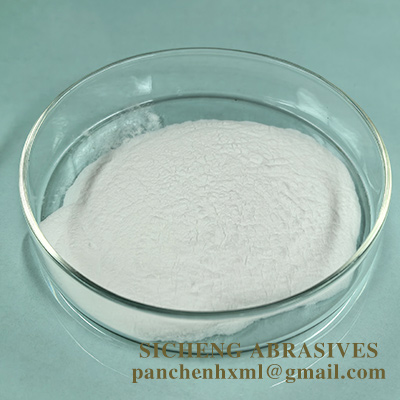
Glass Microbubble 20-90um for Automative Adhesives
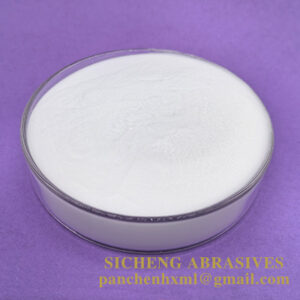
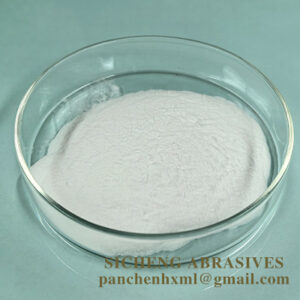
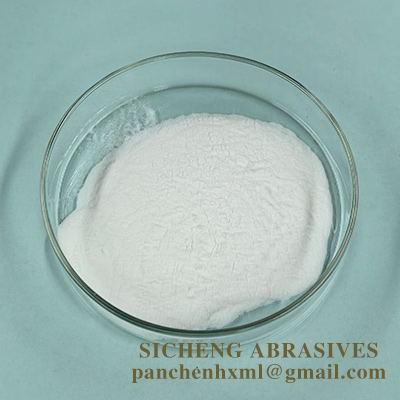
Hollow glass microspheres (20-90μm) are lightweight filler materials specifically designed for automotive component adhesives. The hollow spherical particles offer excellent flowability and easy dispersion.They effectively reduce adhesive density and component weight, while minimizing curing shrinkage and improving the dimensional stability and smoothness of the bonded layer.
The hollow structure imparts excellent thermal insulation, sound insulation, and vibration damping properties, improving the user experience of automotive interiors and structural components under various operating conditions. The addition of hollow glass microspheres reduces the amount of resin used in adhesives, effectively lowering manufacturing costs. They are widely applicable to automotive structural adhesives, sealants, and composite panel adhesives.
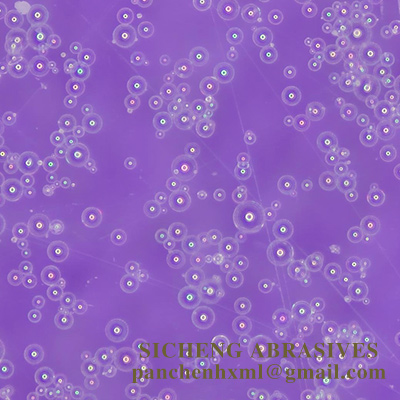
Features of Glass Microbubble 20-90um for Automative Adhesives:
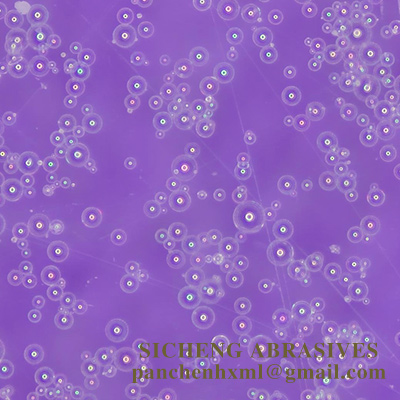
- Hollow glass microspheres have a microscopic morphology of hollow spheres with a wall thickness of approximately 1-2 μm, exhibiting low density and high strength.
- Low specific gravity and high floating rate, making them widely applicable as weight-reducing materials in rubber, latex, wood substitutes, PVC plastisol, and modified resin.
- Produced using a special process, our products feature high crush strength and a high strength-to-weight ratio.
- The hollow glass microspheres are made of soda-lime borosilicate glass with a softening point of approximately 600°C, allowing them to withstand temperatures below 600°C.
- Low thermal conductivity and low dielectric constant. Glass bubbles are non-combusitable and nonporous, it creates a stable hollow structure when used in coatings or products, thus reducing thermal conductivity and dielectric constant.
- Low Alkalinity, low volatile organic compound (VOC) content, and high viscosity.
- Good flowability and low specific surface area.
- Excellent electrical insulation properties and corrosion resistance.
As an additive in matrix materials, its main functions include:
- Reducing weight.
- Thermal insulation.
- Sound insulation and noise reduction.
- Improving dielectric properties.
- Reducing resin usage and VOC emissions.
- Increasing rigidity and preventing cracking.
- Improving durability.
- Improving volume stability and reducing shrinkage and cracking.
Technical Index
| Specific Gravity | 0.12-1.6 g/cm3 |
| Bulk Density | 0.10-0.62 g/cm3 |
| Thermal Conductivity | 0.038-0.085 W/M·K |
| PH | 8-9.5 |
| Dielectric constant | 1.2 -2.0 (100 MHz) |
Specification:
| Spec. | Ture Density (g/cm3) | Bulk Density (g/cm3) | Crush Strength (Mpa/Psi) | D50(um) | D90(um) |
| CL15 | 0.13-0.17 | 0.08-0.09 | 4/500 | 65 | 120 |
| CL20 | 0.20-0.22 | 0.10-0.12 | 4/500 | 65 | 110 |
| CL25 | 0.24-0.27 | 0.13-0.15 | 5/750 | 65 | 100 |
| CL30 | 0.29-0.32 | 0.15-0.18 | 10/1500 | 55 | 85 |
| CL32 | 0.31-0.33 | 0.17-0.19 | 14/2000 | 45 | 80 |
| CL35 | 0.33-0.37 | 0.18-0.21 | 21/3000 | 40 | 70 |
| CL38 | 0.37-0.39 | 0.19-0.22 | 38/5500 | 40 | 65 |
| CL40 | 0.39-0.42 | 0.19-0.23 | 28/4000 | 40 | 70 |
| CL42 | 0.41-0.44 | 0.21-0.24 | 55/8000 | 40 | 60 |
| CL46 | 0.44-0.48 | 0.23-0.26 | 41/6000 | 40 | 70 |
| CL50 | 0.48-0.52 | 0.25-0.27 | 55/8000 | 40 | 60 |
| CL55 | 0.53-0.55 | 0.27-0.29 | 68/10000 | 40 | 60 |
| CL60 | 0.58-0.62 | 0.29-0.34 | 83/12000 | 40 | 65 |
| CL60S | 0.58-0.63 | 0.30-0.34 | 125/18000 | 35 | 55 |
| CM10 | 1.4-1.6 | 0.45-0.50 | 193/28000 | 5 | 10 |
| CM15 | 1.2-1.3 | 0.40-0.45 | 124/18000 | 7 | 15 |
| CM20 | 1.05-1.15 | 0.39-0.44 | 124/18000 | 9 | 20 |
| CM30 | 0.9-1.0 | 0.35-0.4 | 83/12000 | 14 | 30 |
| CS20 | 0.18-0.22 | 0.10-0.12 | 7/1000 | 60 | 90 |
| CS22 | 0.20-0.24 | 0.11-0.13 | 8/1200 | 45 | 70 |
| CS28 | 0.27-0.30 | 0.15-0.17 | 28/4000 | 45 | 65 |
| CS38 | 0.36-0.40 | 0.19-0.22 | 38/5500 | 30 | 50 |
| CS42 | 0.40-0.44 | 0.21-0.24 | 55/8000 | 25 | 40 |
| CS46 | 0.44-0.50 | 0.22-0.25 | 110/16000 | 20 | 30 |
| CS60 | 0.58-0.62 | 0.29-0.33 | 193/28000 | 16 | 25 |
| CS65 | 0.63-0.67 | 0.30-0.33 | 207/30000 | 13 | 20 |
| CS70 | 0.75-0.80 | 0.33-0.35 | 207/30000 | 10 | 15 |
Applications:
- Thermal insulation paint, heat resistance coatings, and UV-resistant coatings. Applications include housing, building materials, aerospace equipment, pipelines, oil storage tanks, industrial plants, and large grain silos.
- Energy-saving building materials, thermal insulation mortar, thermal insulation putty, and noise-reducing coatings.
- Utilizing the good flowability and high crush strength of glass bubble, they are used in oilfield well cement slurry and low-density drilling fluids.
- Low-dielectric engineering plastics. Applications include 5G communication equipment, aircraft radomes, and high-frequency copper-clad laminates (CCL) for PCB circuit boards.
- Low-density silicone adhesives, epoxy resin adhesives, acrylic resin, and polyurethane adhesives. Applications include electronic potting compounds, battery potting compounds, and MS sealants.
- Lightweight engineering plastics, PVC plastisol, and structural glue. Applications include automotive plastic parts, vehicle and home appliance adhesives and sealants, and helmets.
- Anti-corrosion and antifouling coatings. Applications include automotive and marine coatings, pipeline anti-corrosion coatings, zinc-rich primers for steel structures, and weather-resistant anti-corrosion coatings.
- Rubber elastomers. Applications include rubber seals, rubber shoe soles, cable rubber layers, tires, latex products, sporting goods, and rubber everyday toys.
- Solid buoyancy materials. Applications include oil tanker hulls, underwater robot floats, fish buoys, and oil pipeline buoyancy supports.
- Epoxy tooling board. Applications include the manufacture of various molds of epoxy and polyurethane.