

Hollow Glass Microsphere 65-100um for Thermal Insulation Putty
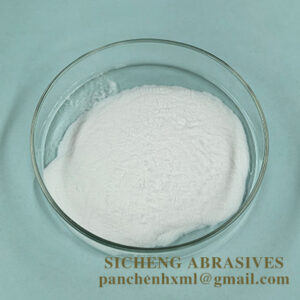
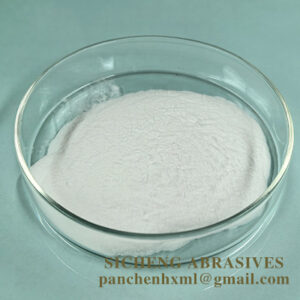
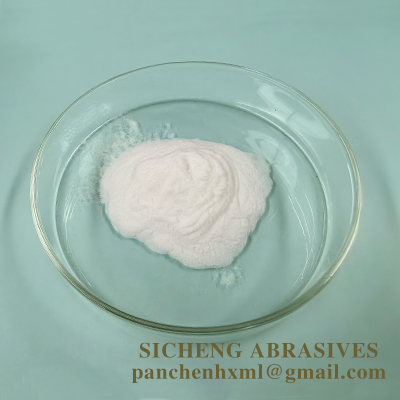
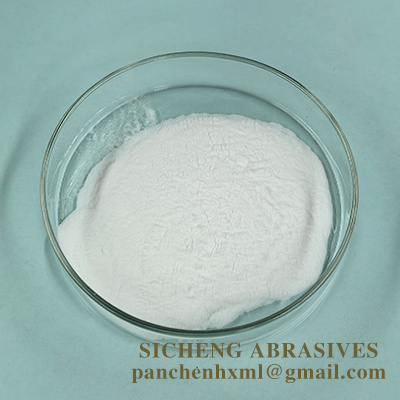
Hollow Glass Microsphere 65–100μm is a closed-cell lightweight glass filler exclusively formulated for thermal insulation putty. With evenly sized particles between 65 and 100 microns and sealed hollow inner cavities, it features ultra-low thermal conductivity to achieve reliable heat insulation. This inert microbead drastically reduces putty bulk weight, boosts anti-crack, waterproof and anti-aging properties, while offering excellent dispersion and easy construction performance. Widely used in exterior wall thermal putty, interior temperature-control putty and roof heat insulation repair mortar.
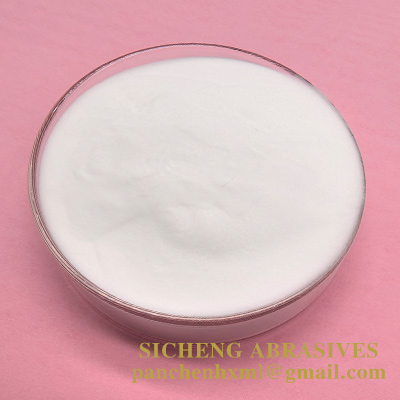
Hollow Glass Microsphere 65-100um for Thermal Insulation Putty Advantage:
1. Cut off heat transfer and achieve efficient heat insulation
Each hollow glass microsphere has a fully sealed hollow cavity filled with static air, which has an extremely low thermal conductivity. When blended into putty, densely stacked microspheres form countless independent thermal barrier units. They effectively block three forms of heat transfer—conduction, convection and radiation—preventing outdoor high temperature from penetrating inward in summer and indoor heat from escaping outward in winter, greatly lowering wall surface temperature difference and reducing building energy consumption for heating and cooling.
2. Stable long-term thermal preservation performance
The borosilicate glass shell is chemically inert with ultra-low thermal expansion coefficient. It will not deform, collapse or lose hollow structure under long-term alternating hot and cold environments. Unlike organic lightweight fillers that age and lose insulation effect, microspheres maintain stable heat preservation capacity for decades. The closed air voids lock static air permanently, delivering consistent constant-temperature insulation for interior and exterior wall putty layers.
3. Auxiliary sound absorption and noise reduction
Numerous tiny closed hollow cavities inside the putty form porous sound-absorbing structures. When sound waves hit the coating surface, they enter the microsphere cavities and generate repeated air friction, consuming sound energy. This weakens the transmission of outdoor traffic noise, wind and rain impact noise, and indoor reverberation noise, improving indoor quietness especially for exterior wall and roof thermal putty.
4. Reduce putty viscosity and boost construction fluidity
Hollow glass microspheres feature high sphericity and smooth glass surface, presenting ball-bearing sliding effect inside the putty system. They reduce internal friction between resin, powder and filler particles, significantly lowering overall slurry viscosity without adding extra water or thinning agent. The improved fluidity makes trowelling, scraping and leveling much smoother; the putty spreads evenly with less drag, avoids sagging during thick-layer construction, and delivers uniform thin coating with better covering power.
Technical Index of Hollow Glass Microsphere 65-100um for Thermal Insulation Putty(CL25):
| No. | Testing Items | Unit | Standard |
| 1 | Appearance | — | White and Good fluidity |
| 2 | Moisture | % | ≤0.30 |
| 3 | Flotation | % | ≥95 |
| 4 | Bulk Density | g/cm3 | 0.13~0.15 |
| 5 | Particle Size | µm | D90≤100 |
| 6 | Specific Gravity | g/cm3 | 0.23~0.27 |
| 7 | Crush Strength | % | 750psi |
Specification:
| Spec. | Ture Density (g/cm3) | Bulk Density (g/cm3) | Crush Strength (Mpa/Psi) | D50(um) | D90(um) |
| CL15 | 0.13-0.17 | 0.08-0.09 | 4/500 | 65 | 120 |
| CL20 | 0.20-0.22 | 0.10-0.12 | 4/500 | 65 | 110 |
| CL25 | 0.24-0.27 | 0.13-0.15 | 5/750 | 65 | 100 |
| CL30 | 0.29-0.32 | 0.15-0.18 | 10/1500 | 55 | 85 |
| CL32 | 0.31-0.33 | 0.17-0.19 | 14/2000 | 45 | 80 |
| CL35 | 0.33-0.37 | 0.18-0.21 | 21/3000 | 40 | 70 |
| CL38 | 0.37-0.39 | 0.19-0.22 | 38/5500 | 40 | 65 |
| CL40 | 0.39-0.42 | 0.19-0.23 | 28/4000 | 40 | 70 |
| CL42 | 0.41-0.44 | 0.21-0.24 | 55/8000 | 40 | 60 |
| CL46 | 0.44-0.48 | 0.23-0.26 | 41/6000 | 40 | 70 |
| CL50 | 0.48-0.52 | 0.25-0.27 | 55/8000 | 40 | 60 |
| CL55 | 0.53-0.55 | 0.27-0.29 | 68/10000 | 40 | 60 |
| CL60 | 0.58-0.62 | 0.29-0.34 | 83/12000 | 40 | 65 |
| CL60S | 0.58-0.63 | 0.30-0.34 | 125/18000 | 35 | 55 |
| CM10 | 1.4-1.6 | 0.45-0.50 | 193/28000 | 5 | 10 |
| CM15 | 1.2-1.3 | 0.40-0.45 | 124/18000 | 7 | 15 |
| CM20 | 1.05-1.15 | 0.39-0.44 | 124/18000 | 9 | 20 |
| CM30 | 0.9-1.0 | 0.35-0.4 | 83/12000 | 14 | 30 |
| CS20 | 0.18-0.22 | 0.10-0.12 | 7/1000 | 60 | 90 |
| CS22 | 0.20-0.24 | 0.11-0.13 | 8/1200 | 45 | 70 |
| CS28 | 0.27-0.30 | 0.15-0.17 | 28/4000 | 45 | 65 |
| CS38 | 0.36-0.40 | 0.19-0.22 | 38/5500 | 30 | 50 |
| CS42 | 0.40-0.44 | 0.21-0.24 | 55/8000 | 25 | 40 |
| CS46 | 0.44-0.50 | 0.22-0.25 | 110/16000 | 20 | 30 |
| CS60 | 0.58-0.62 | 0.29-0.33 | 193/28000 | 16 | 25 |
| CS65 | 0.63-0.67 | 0.30-0.33 | 207/30000 | 13 | 20 |
| CS70 | 0.75-0.80 | 0.33-0.35 | 207/30000 | 10 | 15 |
Applications:
- Epoxy casting & tooling: Lightweight molds, master models, jigs, and fixtures (reduces weight and improves dimensional accuracy).
- Electronic potting & encapsulation: Low‑density, low‑shrinkage encapsulation for sensors, circuits, and battery modules (provides insulation, thermal management, and vibration damping).
- Composite materials & laminates: Lightweight epoxy laminates for marine, aerospace, and automotive parts (improves buoyancy and reduces structural weight).
- Adhesives & sealants: Low‑density epoxy adhesives for bonding dissimilar materials; gap‑filling sealants with low shrinkage.
- Construction & decorative materials: Epoxy flooring, terrazzo, and artificial stone (reduces weight, improves wear resistance, and enhances texture).