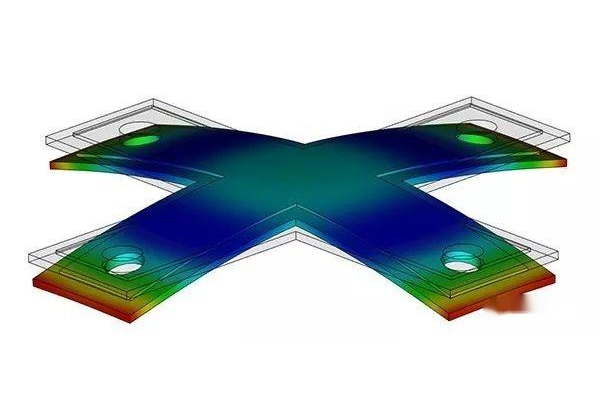


Glass Microsphere for Anti-warpage for Engineering Plastics
Anti-warpage glass microspheres are spherical inorganic fillers specially developed for engineering plastics. Available in hollow and solid types, they feature uniform particle size, smooth surface and excellent isotropy. Widely used in modified engineering plastics to solve product warpage, shrinkage and dimensional instability issues during injection molding and long-term service.
I. Reasons for Anti-Warpage Effects of Glass Microspheres
Warpage is essentially deformation caused by uneven shrinkage in all directions after plastic molding, stress release, and differences in thermal expansion and contraction. Glass microspheres address this at its root through structural and physical property improvements:
1. Eliminating Orientation Differences.
Glass microspheres are solid or semi-solid spherical particles, belonging to isotropic fillers. Unlike glass fiber, talc, and mica, they do not oriented along the flow direction during injection molding melt flow, completely resolving warpage caused by inconsistent shrinkage in the flow direction/perpendicular to the flow direction.
2. Reducing Molding Shrinkage.
The rigid glass spheres occupy fixed positions, limiting the cooling and shrinkage of polymer chains, significantly reducing the overall molding shrinkage rate and minimizing deformation and dents caused by volume shrinkage after demolding.
3. Reducing Internal Residual Stress.
The smooth surface of the spherical particles results in low melt shear resistance and lower mold filling pressure, significantly reducing in-mold shear stress and orientation stress. The slow release of stress after molding prevents warpage.
4. Suppressing Thermal Deformation
The coefficient of linear expansion of borosilicate glass is much lower than that of engineering plastics. After lamination, the overall coefficient of thermal expansion decreases. During thermal cycling and changes in ambient temperature, dimensional deformation is constrained, preventing warping due to temperature changes.
II. Main Application Advantages
1. Excellent Dimensional Stability
Uniform shrinkage in all directions results in high-precision products, suitable for precision structural parts and appearance components. It is not easily deformed over long-term use.
2. Good Processing Performance
Improved melt flowability allows for faster injection molding and can reduce processing temperature and pressure, minimizing deformation caused by process stress.
3. Low Mold Wear
Spherical particles have significantly lower abrasion than glass fiber and mineral powder, preventing scratches on molds and screws during long-term production.
4. Lightweight
Low density reduces product weight while preventing warping, balancing weight reduction and dimensional stability.
5. Balanced Mechanical Properties
Unlike glass fiber, it does not cause embrittlement or surface roughening in products, resulting in a smoother surface finish.
6. Improved temperature and weather resistance.
Enhanced heat resistance and thermal stability, resulting in stronger resistance to deformation under high and low temperature conditions.