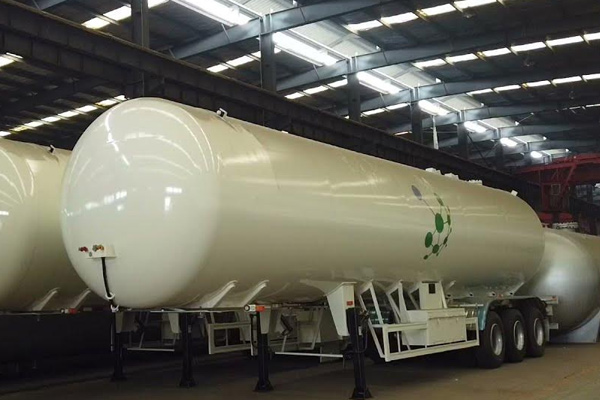


Hollow Glass microsphere 110–120μm for thermal insulating paint in oil tanker
Hollow Glass microsphere 110-120μm is an ideal thermal insulating material in the industrial field. The oil tanker has to bear the heat during transportation. Thermal & heat insulating coating is necessary to get the tanker work continously.
1. Thermal Insulation, Reducing Medium Temperature Fluctuations
The 110–120μm hollow spherical structure traps still air, which has extremely low thermal conductivity. This creates numerous independent, sealed thermal insulation cavities within the coating film, effectively blocking heat conduction and convection. When applied to the outer wall of a tank truck, it reduces the transfer of heat from external sunlight into the tank, inhibiting the temperature rise of the oil inside and reducing oil evaporation losses. It also reduces oil vapor accumulation at high temperatures, improving transportation safety. Compared to ordinary solid fillers, it offers significantly better thermal insulation performance for the same amount added.
2. Lightweight Coating Film, Reducing Overall Vehicle Load
The extremely low density of hollow glass microspheres (0.18–0.46 g/cm³) allows them to replace traditional fillers such as talc, heavy calcium carbonate, and silica powder, significantly reducing the dry film density of the thermal insulation coating. The reduced weight of the tanker truck’s coating helps increase effective cargo capacity, generating economic benefits in the long run and reducing vehicle energy consumption.
3. Excellent temperature and weather resistance, suitable for outdoor vehicle conditions.
The glass-based inorganic material has good thermal stability and withstands alternating high and low temperatures. Tanker trucks operate outdoors for extended periods, repeatedly experiencing sun exposure, diurnal temperature variations, and winter-summer temperature cycles. The microspheres will not decompose, shrink, or crack due to heat; they are also resistant to UV aging, do not easily powder, and maintain the coating’s thermal insulation structure without failure over the long term.
4. Reduced coating thermal shrinkage, minimizing cracking and blistering.
The intact spherical particles provide stress buffering, alleviating internal stress caused by coating curing and temperature changes, improving film toughness, and reducing coating cracking, peeling, and blistering problems caused by deformation of the tank’s steel plate. The sealed hollow structure also blocks moisture and corrosive media penetration to a certain extent, further enhancing the tank’s corrosion resistance.
5. Enhanced Synergistic Effect of Coating Reflection and Barrier Effect
When used in conjunction with aluminum powder and functional pigments and fillers, the spherical particles form a three-dimensional stacked structure, extending the heat conduction path and creating a dual mechanism of radiation reflection and cavity insulation. This effectively reduces solar radiation heat, controls the temperature rise of the tank surface, reduces oil expansion and volatilization due to high temperatures, and lowers safety hazards.
6. Construction and Process Advantages
This particle size belongs to medium to large-sized hollow microspheres with a large cavity volume and high single-particle insulation contribution; the spherical ball effect improves coating fluidity, reduces system viscosity to a certain extent, and facilitates spraying.
7. Chemical Inertness, Compatible with Oil Tank Corrosion Protection Systems
The borosilicate material is chemically stable, resistant to atmospheric corrosion and weak acids and alkalis, and will not react adversely with commonly used tank insulation coating resins such as epoxy resin, acrylic, and polyurethane, making it compatible with mainstream anti-corrosion and heat insulation coating systems for oil tankers.