

The advantage of hollow glass microspheres as adhesive fillers
The adhesive industry is rapidly developing towards lightweighting, functionalization, and high performance. Hollow glass microspheres, as key functional fillers, demonstrate unique application value in reducing density, improving processing performance, and enhancing product reliability. There are several advantages of glass hollow microspheres in this application:
1. Lightweighting and Low-Density
Hollow glass microspheres are hollow spheres with a true density ranging from 0.12 to 0.70 g/cm³. As a lightweight filler, their addition to adhesives can significantly reduce density. In pressure-sensitive tapes, hollow glass microspheres CL15, as a lightweight filler, effectively reduce the weight per unit area. In the meantime, it meets the demand for lightweight tapes in consumer electronics and automotive interiors.
2. Spherical Shape and Processing
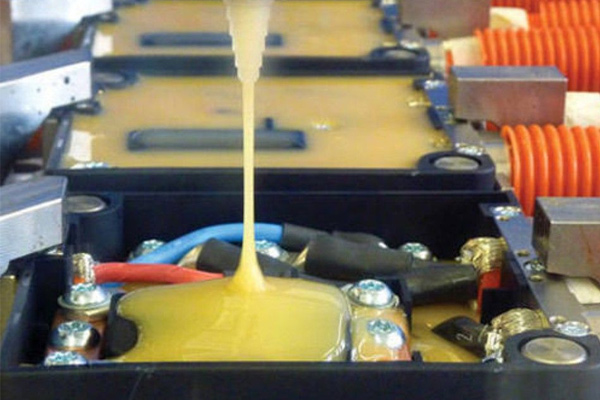
The spherical structure of hollow glass microspheres is similar to that of ball bearings, acting as a lubricant in the adhesive system. This prevents other irregularly shaped fillers from rubbing against each other, affecting flowability. Thereby, it can reduce adhesive viscosity and increasing flowability. This characteristic is particularly important in electronic potting compounds—reducing system viscosity helps the potting compound better fill the small gaps in electronic components, improving potting integrity and reliability.
3. Low Thermal Conductivity and Insulation Properties
Hollow glass microspheres contain a rarefied gas layer with a thermal conductivity between 0.038 and 0.060 W/(m·K). Adding them to electronic potting compounds effectively reduces their thermal conductivity, improving their heat insulation and sound insulation properties. In electric vehicle battery potting resins, hollow glass microspheres can enhance the thermal insulation of the outer shell while maintaining low viscosity, thus improving flow characteristics and processing.
4. Low Dielectric Strength and Signal Integrity
Hollow glass microspheres contain a rarefied gas layer with a dielectric constant of 1.2 to 1.8. Adding them to electronic potting compounds effectively reduces the dielectric constant of the composite material. That is beneficial for improving signal transmission speed, reducing signal delay, and minimizing signal loss in smart terminals. This is of great significance for the potting protection of high-frequency electronic components.
5. Low Oil Absorption and Viscosity Stability
The low oil absorption of CL15 hollow glass microspheres makes them excellent for use in PVC plastisols. The microspheres do not excessively absorb plasticizers from the system, helping to maintain viscosity stability and preventing rheological changes caused by plasticizer adsorption by the filler.
6. Temperature Resistance and Chemical Stability
Hollow glass microspheres are borosilicate glass formed at high temperatures (above 1500℃), exhibiting high chemical stability. As a filler, they do not react with the substrate or other substances, improving the weather resistance and corrosion resistance of adhesives.